A lot of business owners ask me the same question before they start a website: “How many pages do I need?” Most of them expect a big number. The honest answer is, fewer than you think.
A good website isn’t about having more pages. It’s about having the right ones, so a visitor can understand your business, trust you, and get in touch without feeling lost. This guide covers the pages that really matter, what each one should do, and which extras can wait until later.
Start With the Four Core Pages
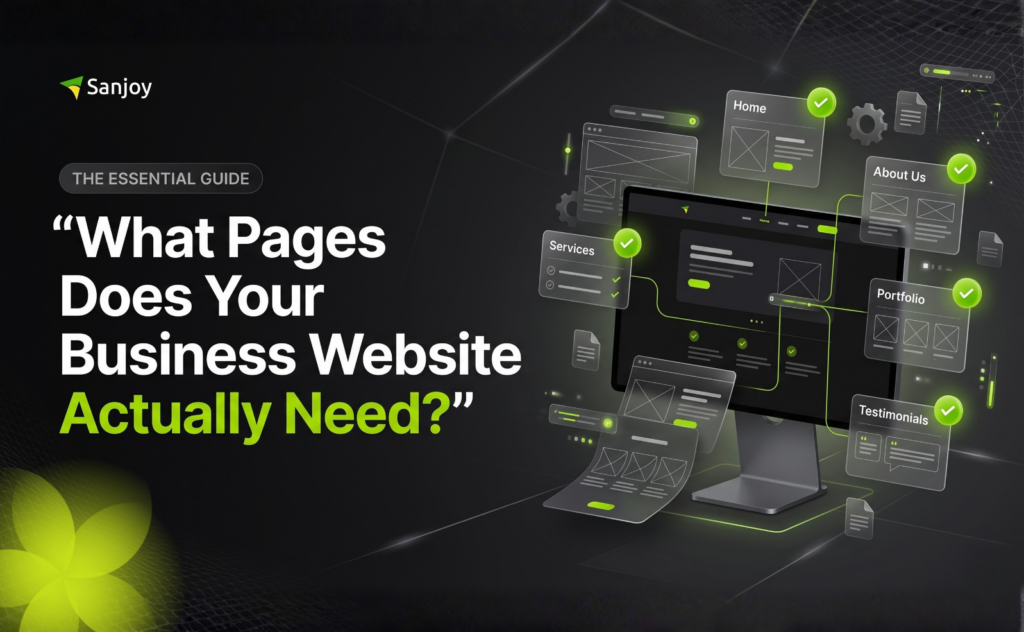
Almost every business website needs four pages: Home, Services, About, and Contact. Together, they answer the questions every visitor has. What do you do? How can you help me? Who am I dealing with? How do I reach you?
If you’re just getting started, these four are enough to launch. You can always add more pages as your business grows, but a website that’s missing the basics will struggle to bring in customers.
Make Your Home Page Do the Heavy Lifting
Your home page is usually the first thing people see, so it needs to be clear within a few seconds. Say what you do, who you do it for, and what the visitor should do next. Add a short look at your services, a bit of proof like reviews or past work, and one clear button such as “Book a Call” or “Get a Quote.” You don’t have to fit everything on this page. Just point people in the right direction.
Add the Pages That Build Trust
People don’t hire a business they don’t trust, especially online. These pages help a stranger feel comfortable enough to reach out. Pick the ones that fit your business.
– Portfolio or Case Studies: show real work and real results that you can stand behind.
– Testimonials: share honest feedback from real clients, with their permission.
– FAQ: answer common questions about price, timing, and process before people have to ask.
– Pricing or Packages: even a starting price helps people decide faster.
– How It Works: explain your process in a few simple steps, so people know what to expect.
Keep the Structure Simple
Once you know your pages, think about how people will move between them. Keep your menu short, ideally five to seven items, and use names people understand. “Services” works better than “What We Offer.” Give every page one clear job and one next step, like a contact button at the bottom. If visitors have to think hard about where to click, most of them will simply leave.
“Your visitors should never have to guess what you do, who you help, or how to contact you.”
Extra Pages Worth Adding
Once the basics are in place, a few extra pages can help people find you and make your website more useful. You don’t need all of them on day one, so add them when you’re ready. If you sell products online, you’ll also need shop, cart, and checkout pages, which are usually set up with WooCommerce.
Blog or Resources
A blog lets you answer the questions your customers are already searching for on Google. Every helpful post is another way for someone to find you. Even one useful post a month is a good place to start.
Privacy Policy and Terms
If your website has a contact form, collects emails, or sells products, you should have a Privacy Policy, and often a Terms page too. They also make your site look more professional. The exact requirements depend on your country and your business, so it’s worth checking with a legal professional.
Not Sure Which Pages You Need?
Every business is different. If you’d like help planning the right pages for your website, book a free call and we’ll work it out together.